
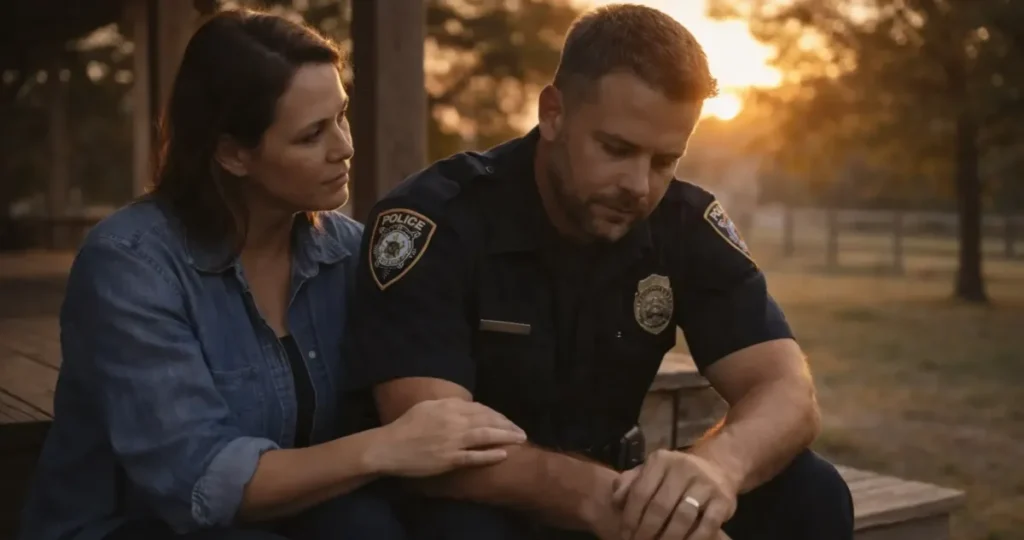
First responders are trained to step into the worst moments of a stranger’s life and bring order to chaos. Firefighters, police officers, paramedics, and dispatchers carry invisible psychological armor that allows them to perform under extreme pressure.
But what happens when that armor begins to crack?
Depression in the first responder community rarely looks like a textbook definition. It is often masked, minimized, or dismissed as “just needing a break.”
At Guardian Grounds Ranch, our mission is to provide confidential, peer-driven care for Texas first responders. In this guide, we help families and leaders recognize the warning signs and take life-saving action.
Key Takeaways
Depression in first responders often hides behind anger, isolation, and overwork.
Burnout and depression are different and require different responses.
Untreated trauma impacts families, careers, and physical health.
Substance use, reckless behavior, and apathy are major warning signs.
Compassionate support is more effective than punishment.
Guardian Grounds Ranch provides confidential, culturally competent healing.
The “Hero” Mask: Why First Responders Hide Their Pain
Before identifying depression, we must understand why it is hidden.
Emergency personnel work in cultures where vulnerability is seen as risky.
They fear:
Losing their badge
Being placed on desk duty
Losing peer trust
Career damage
So they perform.
The breakdown happens at home.
Families are left confused.
Burnout vs. Depression: Understanding the Difference
Burnout
Burnout is caused by chronic workplace stress.
Signs include:
Physical exhaustion
Cynicism
Reduced motivation
Burnout may improve with rest.
Depression
Depression goes deeper.
It affects:
Self-worth
Identity
Relationships
Hope
Time off does not cure depression.
It often worsens it.
7 Silent Signs of Depression in First Responders
1. Extreme Isolation (“The Irish Goodbye”)
Withdrawing from family and friends
Avoiding social events
Spending off-days alone
2. Uncharacteristic Anger
Sudden irritability
Explosive reactions
Low frustration tolerance
3. Substance Escalation
Increased drinking
Hidden bottles
Using substances to sleep
4. Loss of the “Off Switch”
Constant scanning
Hyper-alertness at home
Strong startle responses
5. Cynicism and Apathy
Hopeless statements
Emotional numbness
Loss of meaning
6. Reckless Behavior
Ignoring safety rules
Risk-taking
Driving dangerously
7. Giving Away Possessions
Giving away gear
Handing off valuables
Sudden “goodbyes”
This is an emergency warning sign.
Immediate Support
If you or a loved one are in crisis:
How to Respond: Building Resilience, Not Punishment
Your response matters.
1. Do Not Force Trauma Talk
Focus on behavior, not graphic stories.
Speak with compassion.
2. Reframe Mental Health as Tactical Maintenance
Mental health = equipment maintenance.
It protects careers and families.
3. Provide Confidential Options
Avoid unsafe programs.
Offer trusted, independent resources.
Guardian Grounds Ranch: Healing the Helpers
Guardian Grounds Ranch exists to meet this need.
We provide:
Peer-supported care
Nature-based recovery
Confidential services
Cultural understanding
Here, responders can remove the “hero mask.”
And heal.
Your Support Is the Lifeline
This work depends on community support.
Every donation funds:
Recovery programs
Counseling
Retreats
Peer networks
Help us protect those who protect us.
Frequently Asked Questions (FAQs)
What is the difference between burnout and depression?
Burnout improves with rest. Depression does not and affects self-worth.
How does trauma cause depression?
Unprocessed cumulative trauma overloads the nervous system.
What if someone shows signs of suicide?
Stay with them. Ask directly. Remove lethal means. Get immediate help.
Why avoid department counselors?
Fear of reporting and job loss reduces usage.
How can I help without pushing them away?
Lead with love, observe behavior, and offer confidential support.